Furnace Repair in Olathe, KS
Residential gas furnace repair for Olathe homeowners, available 24/7. We diagnose why the furnace stopped heating — not just which part is easiest to sell — and explain the finding before any work begins.
For service availability, please have your 5-digit ZIP code ready.
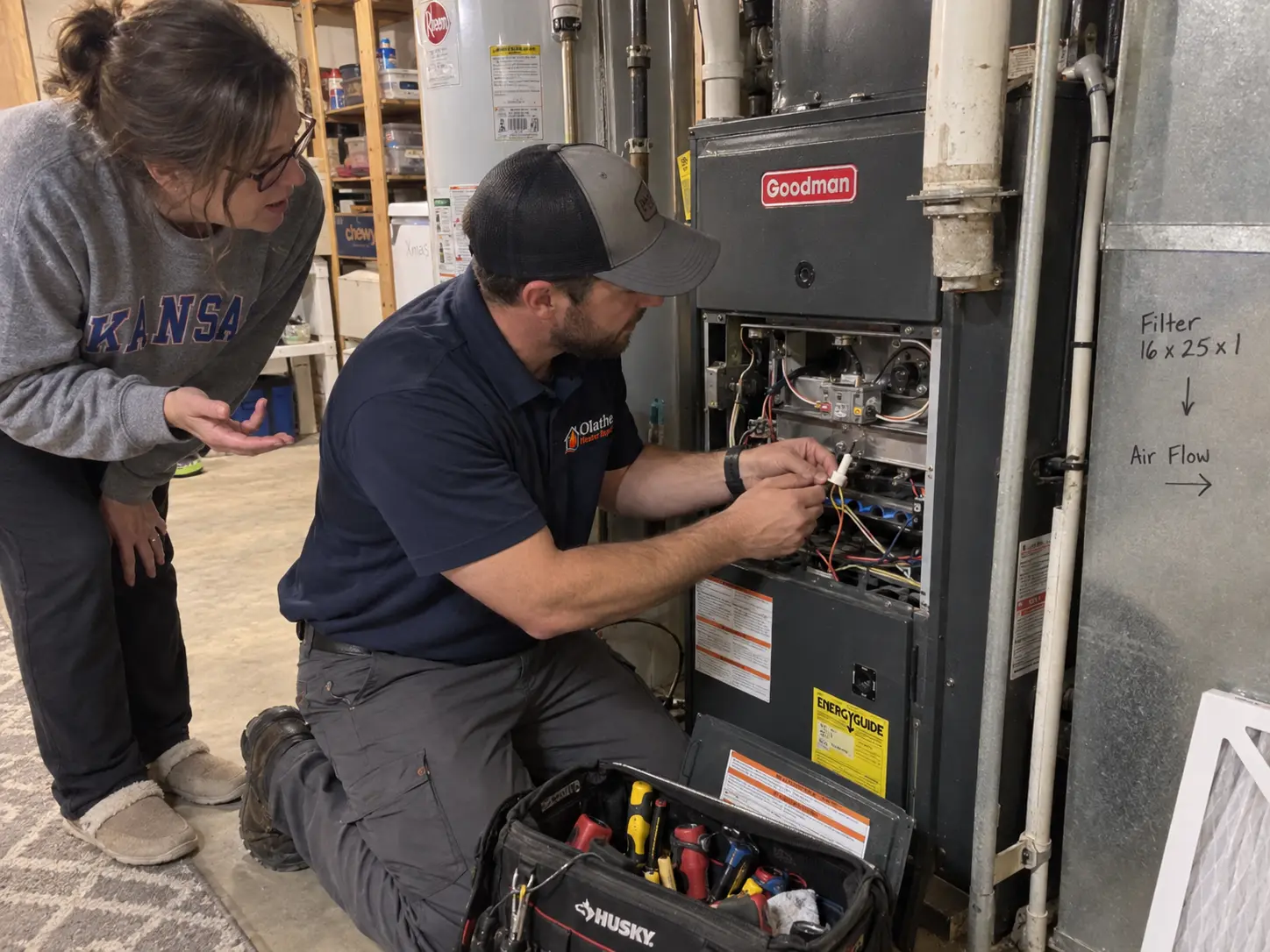
Gas furnace symptoms we see most in Olathe homes
A gas furnace follows a strict sequence every time it runs. The thermostat calls for heat, the inducer motor starts and pulls air through the flue, the pressure switch confirms that draft, the igniter heats, the gas valve opens, the flame sensor proves flame, and the blower starts once the heat exchanger is warm. Understanding that sequence is how a technician turns a vague complaint into a specific fault.
The furnace runs but blows cold air
The blower is working but combustion isn't holding. Most often the flame sensor is oxidized and the control board can't confirm flame, so the gas valve closes a few seconds after ignition. It can also be a fan setting left on ON at the thermostat, which keeps the blower running between heating cycles and pushes room-temperature air.
The furnace won't ignite at all
Cracked hot surface igniters are extremely common, especially on furnaces past the ten-year mark. Other causes include a blocked condensate drain that keeps the pressure switch open, a weak or seized inducer motor, a closed manual gas valve after other work in the home, or a failed control board.
Short cycling
The burners light, run for a few minutes, then shut down well before the thermostat is satisfied. This is usually the high limit switch protecting the furnace from overheating because airflow is restricted — a clogged filter, closed registers, or a dirty blower wheel. Read more in our guide on why a furnace keeps cycling.
Noise that wasn't there before
A boom or whoomph at startup can indicate delayed ignition, which is worth shutting the system down over. A high-pitched squeal usually means blower or inducer bearings. A rattle is frequently a loose panel or a blower wheel with a broken fin. None of these improve on their own.
Weak airflow and uneven rooms
If bedrooms upstairs never keep up while the main floor is comfortable, the cause is often airflow — filter restriction, duct leakage, or a blower not producing rated output. Airflow problems get blamed on furnace size more often than they should be.
What we test during a furnace repair visit
- Thermostat call-for-heat signal and wiring, including C-wire issues after smart thermostat installs
- Filter condition, return air path and register openings
- Inducer motor operation and pressure switch closure
- Igniter resistance and visual condition
- Flame sensor microamp signal and rod condition
- Gas valve operation and burner flame quality
- High limit and rollout switch condition
- Blower motor, capacitor and wheel condition
- Control board sequencing and stored fault codes
- Visual heat exchanger inspection for signs of damage
- Condensate drain and trap on high-efficiency systems
After diagnosis you get a plain explanation of what failed, what the repair involves and what it costs, plus an honest read on whether the age of the system changes the math. Planning ranges are on the heater repair cost estimator.
Furnaces in Olathe housing stock
Olathe spans older homes near the Santa Fe Street corridor and Downtown, mid-2000s subdivisions, and newer construction out toward K-7 and Parker Street. The older basements tend to hold 80% efficiency furnaces with metal flues; the newer builds along the I-35 corridor lean toward condensing furnaces with PVC venting. Those two groups fail differently, and during a hard Kansas freeze the condensing systems generate a recognizable wave of pressure-switch lockouts from frozen condensate lines.
Reference
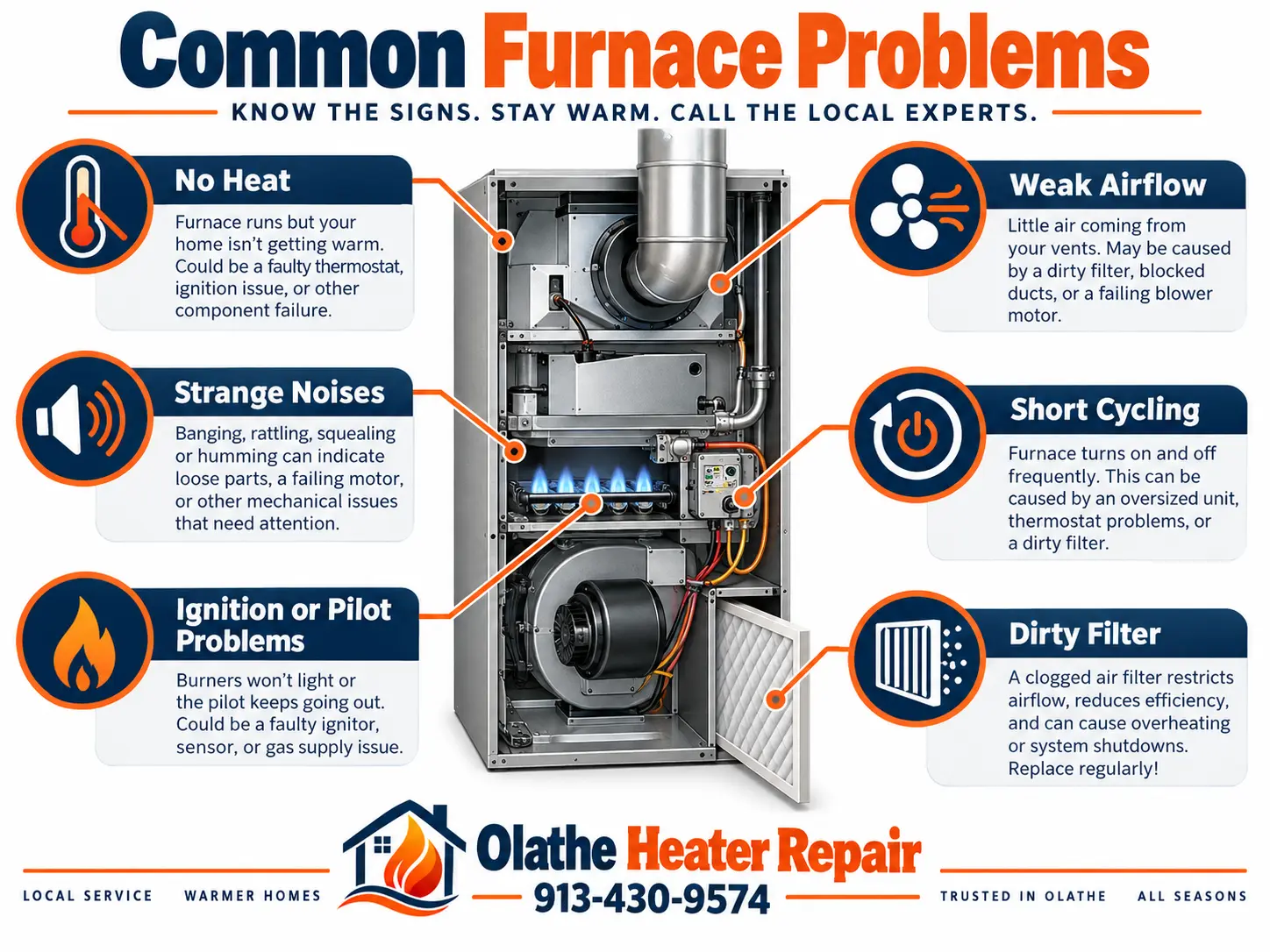
Common Furnace Problems at a Glance
Furnace Repair FAQs
How long does a typical furnace repair take?
My furnace lights then shuts off after a few seconds. What is that?
What does a blinking light on my furnace mean?
Is it safe to keep running a furnace that short cycles?
Do you repair high-efficiency condensing furnaces?
What if my furnace is older than 20 years?
Related pages
Nearby areas
Furnace down right now?
Call 913-430-9574 for a free quote and service availability.
No heat? Help is available 24/7.
Call now for a FREE quote and service availability.
Please have your 5-digit ZIP code ready.